
WWW.GEOPIUM.ORG www.pa-chouvy.org  
Articles Actualités Cartographie Librairie Liens L'auteur
Sur Geopium...

Cartes / Maps (Pierre-Arnaud Chouvy)

A propos

-de l'auteur
-des nouveautés

Liste de diffusion / Mailing List

Ouvrages

-Les territoires de l'opium
-Yaa Baa

Publications -Articles en ligne
-Cartes
Mémoires et thèse

-D.E.A.
-Thèse de doctorat

Ressources documentaires

-PhotoGéographie / PhotoGeography
-Bibliographie générale

-Librairie d'ouvrages essentiels
-Bibliothèques
-Liens WWW


PhotoGéographie
PhotoGeography


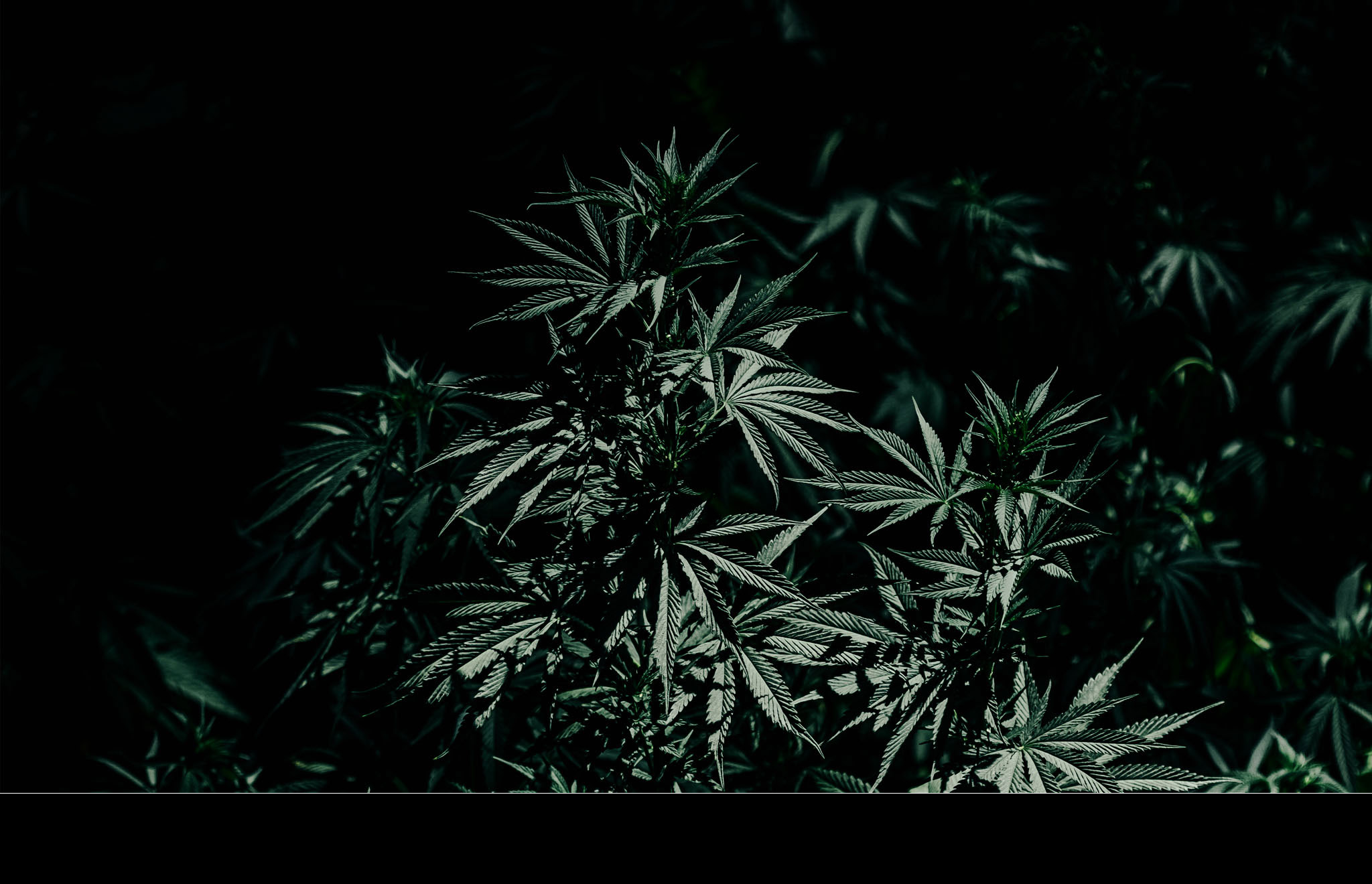
Photos of opium poppies, Burma, Laos, Thailand, Morocco, U.S.A, France, Cape Verde, cannabis, etc.
See also: www.photo-tropism.com

Photos de pavots à opium, Birmanie, Laos, Thaïlande, Maroc, Etats-Unis, France, Cap Vert, cannabis, etc.
Voir aussi: www.photo-tropism.com

Actualités / News
Hors / Outside Geopium


LIVRES / BOOKS


A paraître / Forthcoming

Shooting Up
Counterinsurgency
and the War on Drugs

Vanda Felbab-Brown
Brookings Institution Press
2009 - 260 pages


Nouveau / New

Opium
Uncovering
the Politics of the Poppy

Pierre-Arnaud Chouvy
I.B. Tauris (2009)
Harvard University Press (2010)
260 pages, 10 maps, 9 photos


The World Heroin Market
Can Supply Be Cut?

L. Paoli, V.A. Greenfield, P. Reuter
Oxford University Press
2009 - 392 pages


Crime, War and Global Trafficking
Designing International Cooperation

Christine Jojarth
Cambridge University Press
2009 - 342 pages


Seeds of Terror
How Heroin is Bankrolling
the Taliban and al Qaeda

Gretchen Peters
Thomas Dunne Books
2009 - 320 pages


Afghanistan Narcotics and U.S. Policy

Christopher M. Blanchard
Nova Science Publishers
2009


The Golden Triangle
Inside Southeast Asia's Drug Trade

Ko-lin Chin
Cornell University Press
2009 - 296 pages


Merchants of Madness
The Methamphetamine Explosion in the Golden Triangle

Bertil Lintner & Michael Black
Silkworm Books
2009 - 200 pages


Drugs and the World

Axel Klein
Reaktion Books
2008 - 224 pages


Drugs in Afghanistan
Opium, Outlaws and Scorpion Tales

David Macdonald
Pluto Press
2007 - 320 pages


The United Wa State Party:
Narco-Army or Ethnic Nationalist Party?

Tom Kramer
East-West Center
2007 - 94 pages


PAPERS & REPORTS


Patterns and Trends of ATS and Other Drugs in South-East Asia

UNODC
November 2009


After the War on Drugs
The Transnational Threat in Afghanistan

Transform
November 2009


UN Report Misleading on Afghanistan's Drug Problem

Erik Leaver
Foreign Policy in Focus
November 5, 2009


Addiction, Crime and Insurgency
The Transnational Threat in Afghanistan

UNODC
2009


Neither War Nor Peace
The Future of the Cease-Fire Agreements in Burma

Tom Kramer
Transnational Institute
2009 - 40 pages


A Report on Global Illicit Drug Markets 1998-2007
(6 MB PDF)

European Commission
March 2009


UNODC Annual Report 2009
(2.8 MB PDF)

UNODC
11 March 2009


How to stop the drug wars
Prohibition has failed; legalisation is the least bad solution

The Economist
5 March 2009


Withdrawal Symptoms in the Golden Triangle
A Drugs Market in Disarray

T. Kramer, M. Jeslma, T. Blickman
Transnational Institute
January 2009


Counter-Narcotics to Stabilize Afghanistan: The False Promise of Crop Eradication (PDF)

Center on International Cooperation
Barnett Rubin & Jake Sherman
February 2008

Read also: discussion by Barnett Rubin on "More misleading points on drugs in Afghanistan from UNODC, USG, etc.".


SELECTED WEBSITES


www.davidmansfield.org


International Drug Policy Consortium


The International Society for the Study of Drug Policy (ISSDP)


Visit DrugStrat


Sites Web personnels
de géographes français


Geopium Logo by Jennifer Dziad (2004)


Plan de la page / Page outline:

A propos de Geopium / About Geopium - Géographie et opium : Geopium / Geography and Opium : Geopium - Contact - Liste de diffusion / Mailing List - Logo - Copyright - Statistiques - Mises à jour / Updates. Et aussi / And also: Actualités / News - Ouvrages / Books - Nouveaux articles / New Papers.


A propos de Geopium
(Also in English: "About Geopium")

Geopium.org a été créé et est édité par Pierre-Arnaud Chouvy (em@il), géographe chargé de recherche au Centre national de la recherche scientifique (C.N.R.S., laboratoire Prodig).

Geopium.org est un site d'information et de publication relatif aux problématiques de la géopolitique des drogues illicites en Asie. Il sert la diffusion de l'information géographique en proposant des ressources documentaires pour la recherche en sciences humaines, sociales et politiques. Les thématiques principales abordées sur Geopium sont celles relatives à la production, au trafic et à la consommation d'opiacés (opium, morphine, héroïne) dans les espaces dits du "Triangle d'Or" (Birmanie, Laos, Thaïlande) et du "Croissant d'Or" (Afghanistan, Iran, Pakistan).

Ce sont les facteurs géopolitiques permettant d'expliquer le recours à l'économie des drogues illicites dans ces régions qui sont au centre des publications de Geopium. L'étude des axes du trafic étend nécessairement les espaces considérés au reste de l'Asie : Inde, Chine, Asie centrale et Russie orientale. Les contextes et les conséquences d'un tel recours sont multiples et enrichissent d'autant la problématique générale : les phénomènes de diffusion du VIH / sida le long des routes du trafic, par exemple, ou encore et surtout, la place des activités illicites dans l'économie des guerres civiles, font partie des axes de recherche abordés sur Geopium.

Enfin, les reconversions ou les diversifications, telles que celles qui ont récemment pris place en Birmanie avec la production de méthamphétamine (yaa baa), sont aussi traitées par les publications proposées sur Geopium.


De la géographie et de l'opium : Geopium
(Also in English: "Geography and Opium: Geopium")

L’opium, tout à la fois remède et poison, est une substance qui exerce en Occident une fascination d’autant plus grande qu’elle y fut longtemps entourée d’un mystère que les origines et les utilisations extrême-orientales que l’on voulait bien lui prêter, certes à tort, peuvent en partie expliquer. Le pavot à opium exprime toujours cette dualité selon laquelle il peut soulager maux et douleurs, mais aussi enchaîner son consommateur invétéré dans une grave dépendance.

Cependant, si la pratique consistant à fumer de l’opium est certes chinoise, quoique de façon indirecte, l’origine géographique du pavot somnifère, Papaver somniferum L., est loin d’être extrême-orientale, puisque l’on estime que la plante est apparue entre la région méditerranéenne et l’Asie mineure. Le mystère qui subsiste quant aux origines exactes du pavot n’a donc d’égal que l'opacité qui caractérise ses deux régions de production actuelles les plus importantes au monde: le Triangle d'Or, en Asie du Sud-Est continentale, et le Croissant d'Or, en Asie du Sud-Ouest.

L’opium illicite mondial est produit, dans son immense majorité, au long de ces 7 500 kilomètres d’étroite succession de montagnes qui s’étirent depuis la Turquie jusqu’au Vietnam, en passant bien sûr par l’Afghanistan. Mais c’est à l’ouest et à l’est de cette bande montagneuse, de part et d’autre de l’Inde, que se situent les deux plus importantes régions productrices d’opium au monde, respectivement le Croissant d’Or et le Triangle d’Or.

Il n’en a certes pas toujours été ainsi et les bouleversements caractéristiques de la culture du pavot à opium comme de son trafic, qui ont marqué l’histoire de l’Asie depuis le début du XIXe siècle, semblent plus que jamais être d’actualité.

Les deux espaces dits du « Triangle d'Or » et du « Croissant d'Or » réunissent de nombreux territoires dont les différences et les similitudes sont transcendées par un phénomène majeur commun : la culture illicite du pavot somnifère et la transformation de l’opium en héroïne. Quant aux autres caractéristiques des aires en question, nombre d’entre elles permettent également que soient opérés certains rapprochements et que soit établie leur comparaison, le Triangle d’Or et le Croissant d’Or correspondant en effet à deux régions altitudinales qui ont longtemps été difficiles d’accès, ou qui le sont toujours. Ils peuvent ainsi être dits marginaux en fonction de leur position de marche, les espaces montagneux les constituant en partie pouvant être qualifiés de périphériques par rapport aux bassins et aux vallées qui accueillent les centres étatiques régionaux.

Mais le Triangle d'Or et le Croissant d'Or présentent aussi cette caractéristique commune d’être superposés à des espaces polyethniques et, surtout, interétatiques. En effet, dans les deux régions, les aires de production de pavot à opium chevauchent chacune les frontières interétatiques des trois pays qui les abritent : historiquement et stricto sensu, les espaces du Triangle d'Or et du Croissant d'Or sont surimposés aux espaces frontaliers contigus de la Birmanie, du Laos et de la Thaïlande d’une part, et de l’Afghanistan, de l’Iran et du Pakistan d’autre part.

On peut légitimement s’interroger sur la nature des facteurs qui ont permis, sinon favorisé, le développement de telles productions d’opiacés en Asie. Quels sont ceux, particulièrement, qui ont pérennisé et ancré le recours à l’économie de l’opium précisément dans les espaces du Triangle d'Or et du Croissant d’Or ? Et comment expliquer, enfin, que ce même recours ne se soit pas étendu aux régions périphériques des espaces du Triangle d'Or et du Croissant d'Or, alors même que certains Etats y présentent un fort potentiel de production d’opium et, à l’instar de la Chine, l’ont parfois amplement prouvé ?

Outre la question du recours à une activité économique particulière, c’est donc celle de la localisation et de la spatialisation de la production illicite d’opium qui est au centre de la problématique de Geopium.

Particulièrement importantes, également, sont l'observation et la compréhension, d'une part, de la complexité et de la diversité des itinéraires du narcotrafic depuis les deux espaces, et d'autre part, des mécanismes permettant la diffusion de l'épidémie du VIH / sida le long de ces mêmes itinéraires, en Asie centrale comme en Chine.

C’est, en somme, une lecture géopolitique de la genèse et de la pérennisation des territoires de l’opium qui est proposée ici).

Extrait de l'ouvrage Les territoires de l'opium, de Pierre-Arnaud Chouvy (Olizane, Genève, 2002).

***

D'autres articles relatifs à la géopolitique ou à la géohistoire des drogues illicites en Asie sont disponibles ici. Enfin, de nombreuses cartes détaillant la production et le trafic de drogues illicites en Asie sont disponibles ici.


About Geopium

Geopium.org was created and is edited by Pierre-Arnaud Chouvy (em@il), geographer and research fellow at the National Center for Scientific Research (C.N.R.S., Prodig unit).

Geopium.org is a website offering information and publications on the geopolitics of illicit drugs in Asia.
Its objective is to broadcast geographic information by posting documentary resources useful for researchers in the humanities, and the social and political sciences. The main issues addressed on Geopium relate to the production, traffic and consumption of opiates (opium, morphine, heroin) in the ‘Golden Triangle’ (Burma, Laos, Thailand) and ‘Golden Crescent’ (Afghanistan, Iran, Pakistan) areas.

Geopium publications focus on the geopolitical factors that explain why and how people and organisations resort to the economy of illicit drugs in Asia. Research conducted on trafficking itineraries extends the study of opium production areas to the rest of Asia: India, China, Central Asia, and Russia. The contexts and consequences of such resorts are numerous and further enrich the general initial focus: from the spread of HIV/AIDS along drug-trafficking routes to the role played by illicit activities in war economies, Geopium addresses many drug-related topics.

Finally, reconversions and diversifications of illicit drug productions, such as the recent methamphetamine (yaa baa) upsurge in Burma, are also dealt with in the publications posted on Geopium.


Geography and Opium : Geopium

(Text translated by Michael Lavin: mrmlavin@btconnect.com)

The fascination exerted in the West by opium – a substance that is at once a remedy and a poison – has been enhanced by the aura of mystery that has long surrounded it, an aura at least partially fuelled by the Far Eastern origins and uses that were frequently, and erroneously, attributed to the drug. The opium poppy continues to express this strange duality: on the one hand, it relieves pain and suffering, but, on the other, it is capable of plunging long-term users into the hopelessness of severe addiction.

However, while the routine smoking of opium is certainly, although indirectly, a Chinese practice, the geographic origin of the opium poppy, Papaver somniferum L., is by no means Far Eastern. Indeed, it is thought that the plant first appeared somewhere between the Mediterranean region and Asia Minor. The continuing mystery concerning the poppy’s exact origins is equalled only by the opacity which characterises the two largest opium-producing regions in the world today – the Golden Triangle, in Mainland South-East Asia, and the Golden Crescent, in Southwest Asia.

Far in a way the largest proportion of the world’s illicit opium is produced in the closely-packed mountain ranges spanning the 7,500 km from Turkey to Vietnam and passing, of course, through Afghanistan. But it is in the western and eastern parts of this mountainous band, on either side of India, that are to be found the world’s two most important illicit opium-producing regions in the present day, respectively the Golden Crescent and the Golden Triangle. Certainly, it has not always been this way, and the kind of disruptions characteristic of opium cultivation and trafficking which have marked the history of Asia since the beginning of the 19th century are now more relevant than ever.

The two regions known as the “Golden Triangle” and the “Golden Crescent” include numerous territories whose differences and similarities are transcended by a major shared phenomenon: the illicit cultivation of the opium poppy and the transformation of opium into heroin. Many of the other characteristics of the territories in question lend themselves to the establishment of certain rapprochements and comparisons.

For example, both the Golden Triangle and the Golden Crescent are located high lands and both have been, and indeed still are, difficult to reach. They can thus be termed marginal due to their geographical position, while the mountainous areas of which they are constituted can be classified as peripheral to the basins and valleys hosting regional government centres.

But the Golden Triangle and the Golden Crescent also share the characteristic of being multiethnic areas which overlap national borders. As a matter of fact, in the two regions, the areas dedicated to the production of the opium poppy both straddle the borders of the three countries that contain them; historically and strictly speaking, the Golden Triangle and the Golden Crescent are superimposed on the contiguous borders of Burma, Laos and Thailand on the one hand, and Afghanistan, Iran and Pakistan on the other.

Legitimate questions can be asked as to the nature of the factors that have allowed, or even encouraged, the development of such high levels of opiate production in Asia. Which factors in particular have anchored and perpetuated an opium economy, specifically in the Golden Triangle and the Golden Crescent? And, in view of the fact that a number of countries have a high potential for the cultivation of opium and have, like China, amply demonstrated it, what explanation can be put forward to account for the fact that the phenomenon has not extended beyond the regions adjoining the Golden Triangle and the Golden Crescent?

More than the question of the resort to a particular economic activity, here the central issue is that of the localisation and spatialisation of illicit opium production.

Also of great interest are the study and analysis of the complexity and diversity shown by the drug trafficking routes from and within the Golden Triangle and the Goden Crescent. The spread of the HIV and Aids along drug trafficking routes, especially in Central Asia and in China, is one of the most important topics in the field of drug studies as far as health issues are concerned.

In the end, it is a geopolitical reading of the genesis of the opium territories that is offered here.

An excerpt from Les territoires de l'opium, by Pierre-Arnaud Chouvy (Olizane, Geneva, 2002), translated by Michael Lavin.

***

Other papers related to the geopolitics and geohistory of illicit drugs in Asia are available here. Also, many maps detailing illicit drugs production and trafficking in Asia are available here.


Contact

Pour contacter l'auteur, Pierre-Arnaud Chouvy :

NOSPAMpachouvy@geopium.org

Attention : retirer manuellement "NOSPAM" du début de l'adresse. Manually remove "NOSPAM" from address.


Liste de diffusion / Mailing List

Pour être tenu au courant des mises à jour de Geopium, abonnez-vous à sa liste de diffusion en entrant votre adresse email.

Subscribe to Geopium's mailing list to receive updates by entering your email address.

S'abonner / Subscribe

Se désabonner / Unsubscribe

Accès au groupe Geopium / Access to Geopium Group


Logos Geopium Logos

Si vous souhaitez inclure un lien à Geopium sur vos pages Web, vous pouvez utiliser les logos fournis ici.

If you would like to include a link to Geopium on your web page, feel free to use one of logo "stickers" provided here.

Logo by Jennifer Dziad, © Dziad Designs 2004.


Copyright

Les documents disponibles sur www.geopium.org et www.pa-chouvy.org sont soumis aux lois classiques du copyright (©) et leur utilisation ou les citations de leurs parties doivent faire mention explicite des sources écrites et électroniques complètes.


www.geopium.org

Statistiques / Statistics

En 2007, Geopium a reçu 311 239 visiteurs journaliers uniques (232 944 en 2006, 90 965 en 2005, 43 259 en 2004, 26 525 en 2003, 18 934 en 2002) qui, en 319 338 visites (240 473 en 2006, 94 933 en 2005, 45 717 en 2004, 27 722 en 2003, 19 525 en 2002), ont accédé à 668 027 pages (547 733 en 2006, 223 142 en 2005, 111 757 en 2004, 65 053 en 2003, 44 625 en 2002).

In 2007, 311,239 unique daily visitors (up from 232,944 in 2006, 90,965 in 2005, 43,259 in 2004, 26,525 in 2003 and 18,934 in 2002) have visited 668,027 pages (up from 547,733 in 2006, 223,142 in 2005, 111,757 in 2004, 65,053 in 2003 and 44,625 in 2002) in 319,338 visits (up from 240,473 in 2006, 94,933 in 2005, 45,717 in 2004, 27,722 in 2003 and 19,525 in 2002).

Sites référant à Geopium
Back links to Geopium


Mises à jour / Updates

Dernière mise à jour le 26 novembre 2009.

Last update on 26 November 2009.

Webmaster : Pierre-Arnaud Chouvy

© 1998-2009

WWW.GEOPIUM.ORG & WWW.PA-CHOUVY.ORG

"Pavot-monde" by Jennifer Dziad, © Dziad Designs 2002.


Search the Web
Search Geopium

Bookmark and Share

Ouvrages / Books
Par / By Pierre-Arnaud Chouvy

Opium
Uncovering
the Politics of the Poppy

About "Opium"
I.B. Tauris

London (2009)
30% off until March 2010 (pdf)


Harvard University Press
Cambridge (March 2010)


About "Yaa Baa"

Yaa Baa: Production, Traffic, and Consumption of Methamphetamine in Mainland Southeast Asia


A propos de "Les territoires de l'opium"

Les territoires de l'opium. Conflits et trafics du Triangle d'Or et du Croissant d'Or.

Nouveaux articles
New Papers
Par / By Pierre-Arnaud Chouvy

Autres articles / Other Papers

Trafic de drogue: les routes de l'héroïne entre l'Asie et l'Europe

Pierre-Arnaud Chouvy
Questions internationales
N° 40
Novembre - décembre 2009.


Opium et développement alternatif en Asie:
quel bilan ?

Pierre-Arnaud Chouvy
Revue Tiers Monde
Juillet - septembre 2009.


Afganistan: absolútne zlyhanie globálneho protidrogového úsilia (Afghanistan: the Ultimate Failure of Global Counter-Narcotics)

Pierre-Arnaud Chouvy
Euro-Atlantic Quarterly
July 2009.


Quelle politique antidrogue pour l'Afghanistan ?

Pierre-Arnaud Chouvy
Sciences-Po - CERI
Juin 2009.


Détours d'horizons

Pierre-Arnaud Chouvy
EchoGéo
29 mars 2009.


L'échec mondial de la lutte antidrogue: quelles leçons pour l'Afghanistan ?

Pierre-Arnaud Chouvy
EchoGéo
30 octobre 2008.


Afghanistan and the failure of global counternarcotics

Pierre-Arnaud Chouvy
Afghanistan Info
N° 63 - September 2008.


Tropisme géographique et tropisme photographique

Pierre-Arnaud Chouvy
EspacesTemps.net
Juillet 2008.


Licensing Afghanistan's Opium Production: Solution or Fallacy?

Pierre-Arnaud Chouvy
Caucasian Review of International Affairs
Vol. 2 n° 2 - Spring 2008.


Production de cannabis
et de haschich au Maroc:
contexte et enjeux

Pierre-Arnaud Chouvy
L'espace politique
N° 4 Varia (pdf) - 2008
pp. 5-19.


Production illicite d’opium
et sécurité globale
en Afghanistan

Pierre-Arnaud Chouvy
Sécurité globale
N° 2 - Février 2008
Repenser la sécurité nationale

pp. 131-143


Agricultural drug economies: cause or alternative to intra-state conflicts?

Pierre-Arnaud Chouvy
Laurent Laniel (www)
Crime, Law
and Social Change

Vol. 48, N° 3-5, Dec 2007
pp. 133-150


Drug trafficking

Pierre-Arnaud Chouvy
in S.C. Tucker
The Encyclopedia of the Cold War: A Political, Social, and Military History
2007, Santa Barbara
ABC-CLIO, pp. 339-441.


Le défi afghan de l'opium

Pierre-Arnaud Chouvy
ETVDES
Décembre 2006
Tome 405/6
, pp. 597-607.


Production agricole de drogues illicites et conflictualités intra-étatiques

À travers des cas d’étude choisis parmi les principales régions productrices de drogues illicites au monde (Afghanistan, Afrique de l’Ouest, Birmanie, Bolivie, Colombie, Maroc et Pérou), cet article brosse un panorama mondial dans l’objectif de mieux comprendre comment ces productions peuvent soit favoriser l’émergence de conflits, soit faciliter leur prolongation ou, à l’inverse, prévenir certaines crises. Ce sont ainsi les relations complexes qu’entretiennent l’économie agricole des drogues illicites et les conflictualités qui sont analysées dans le contexte déterminant du sous-développement et de la mondialisation.

Pierre-Arnaud Chouvy
Laurent Laniel (www)
Cahiers de la sécurité
N° 62
Troisième trimestre 2006
pp. 223-253


Production de drogue et stabilité des Etats
Drug Production and State Stability

Pierre-Arnaud Chouvy
Laurent Laniel

SGDN-CERI
Rapport - Policy Brief
Mai 2006 - May 2006


Morocco's smuggling rackets: hashish, people and contraband

Jane's Intelligence Review

Pierre-Arnaud Chouvy
Jane's Intelligence Review

1 December 2005 (Part 2).


Morocco said to produce nearly half of the world's hashish supply

Jane's Intelligence Review

Pierre-Arnaud Chouvy, Jane's Intelligence Review, 1 November 2005 (Part 1).


The dangers of opium eradication in Asia

Jane's Intelligence Review

Pierre-Arnaud Chouvy
Jane's Intelligence Review
1 January 2005.


Drugs and the Financing of Terrorism

Pierre-Arnaud Chouvy
Terrorism Monitor
21 October 2004
Volume 2, Issue 20.


De la géopolitique des drogues illicites.

Sommaire et sélection d'articles du n° 112 d'Hérodote

Pierre-Arnaud Chouvy
Laurent Laniel
Hérodote n° 112
1er trimestre 2004
.


Géopolitique des drogues illicites en Asie.

Géopolitique des drogues illicites en Asie.

Pierre-Arnaud Chouvy
Hérodote n° 109
2ème trimestre 2003.


Web Site and Programs Copyright © Free Site Templates, 1999. All Rights Reserved.
Free Site Templates is a JimWORLD web property. Legal & Privacy.